


What do you think is the future of AI?
The Future of AI: Will We Control It, or Will It Change Us?
Artificial intelligence is no longer something we only see in science fiction movies. It is already helping us write, solve problems, create images, learn new skills, and perform tasks that once required hours of work.
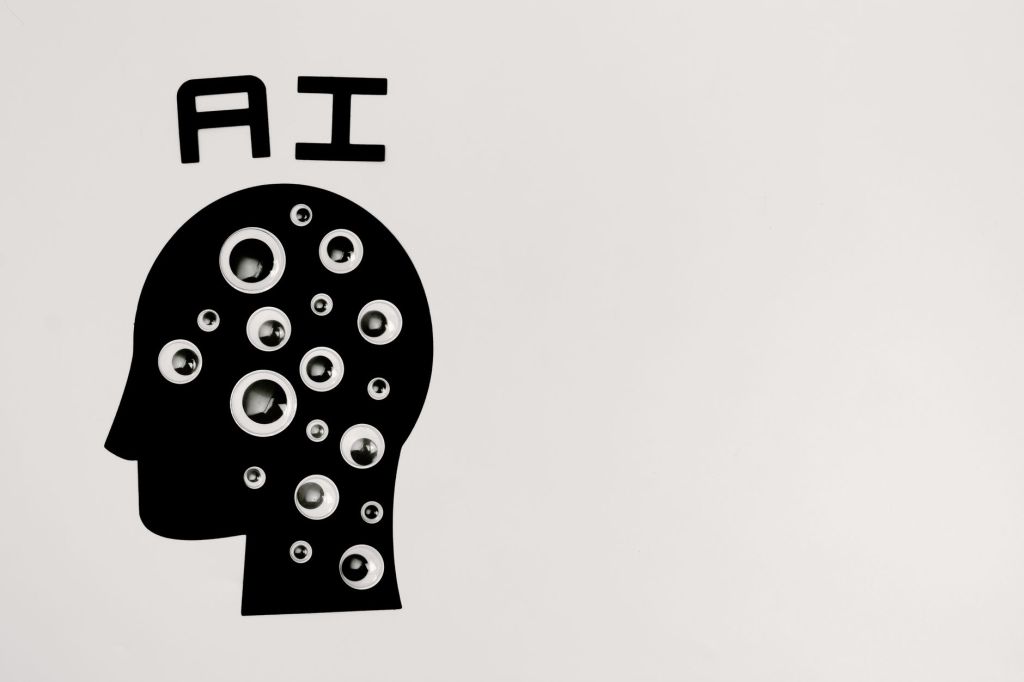
But when I think about the future of AI, I wonder about something bigger than what machines will be able to do. I wonder what kind of humans we will become as machines become more intelligent.
AI Will Change How We Work
Imagine waking up one morning and having an AI assistant organize your day, answer your emails, research your business ideas, and help you complete projects before you even finish your morning tea.
That future may become increasingly common.
AI will likely automate many repetitive tasks, allowing people to spend more time on creative work, relationships, and solving meaningful problems. However, some jobs will change or disappear, while others will emerge.
The challenge will be learning how to adapt.
I believe people who learn to work alongside AI will have new opportunities. We may not need to know everything ourselves, but we will need to know how to ask good questions, evaluate answers, and use technology wisely.
Creativity Will Become More Accessible
One of the most interesting possibilities is how AI could change creativity.
Someone with a story but no filmmaking experience might use AI to produce a movie. An aspiring musician could experiment with sounds without owning expensive equipment. A writer could use AI to explore ideas, organize research, and overcome creative obstacles.
The tools will become more accessible, but that does not mean everyone will create something meaningful.
Our experiences, emotions, memories, and perspectives will still matter.
AI might help me develop a book idea, but it has not lived my life. It has not experienced my particular disappointments, celebrated my achievements, or developed my personal philosophy through experience.
Technology can help us express ourselves, but we must still decide what is worth expressing.
The Danger of Becoming Too Dependent
Every powerful invention comes with a responsibility.
If AI can answer almost any question, will we stop learning how to think critically? If it can write for us, will we lose the patience required to develop our own writing skills? If it can make decisions, will we gradually surrender our judgment?
These are questions worth asking.
Convenience is wonderful, but not every difficult task should be eliminated. Sometimes, the struggle is where the learning happens.
I believe we should use AI to improve our abilities rather than replace our willingness to develop them.
We should remain curious, question what we are told, and remember that an answer delivered confidently is not necessarily a correct answer.
Will AI Make Life Better for Everyone?
AI has the potential to improve healthcare, accelerate scientific discoveries, personalize education, and help us solve complex problems.
Imagine a student receiving individualized lessons regardless of where they live. Imagine researchers identifying promising treatments more quickly. Imagine small businesses using affordable AI tools to compete with much larger companies.
These possibilities are exciting.
However, progress is not automatically shared equally. Access to technology, privacy, misinformation, job displacement, and the concentration of power will all influence how beneficial AI becomes.
The future will depend not only on what we build but also on the decisions we make about how to use it.
We need responsible developers, thoughtful governments, informed citizens, and clear boundaries around powerful technologies.
The Human Qualities That Will Matter Most
As AI becomes more capable, I suspect certain human qualities will become even more valuable.
Empathy. Curiosity. Adaptability. Creativity. Critical thinking.
A machine might help us analyze a difficult situation, but understanding another person’s feelings involves more than processing information. Technology can generate a poem, but the meaning we find in it depends on our own experiences.
Perhaps the real advantage in the future will not belong to people who know how to do everything themselves. It will belong to people who know how to combine technology with good judgment, imagination, and human understanding.
We should not compete with machines at everything. We should discover what machines can help us accomplish while continuing to develop the qualities that make our lives meaningful.
My Final Thoughts
I cannot predict exactly what AI will look like in ten, twenty, or fifty years. The technology may advance in ways that are difficult for us to imagine today.
But I keep returning to one simple thought: The future of AI is also a question about the future of humanity.
Will we use it to become more creative, capable, and connected? Or will we become so dependent on convenience that we forget how to think, create, and solve problems for ourselves?
I believe the best future is one in which AI gives us more opportunities to live meaningful lives rather than simply helping us do more things in less time.
We do not have to fear every technological change, and we should not blindly celebrate every new invention.
We can stay curious, learn as we go, and adapt to what comes next.
After all, the future is not just something we wait for. It is something we help create through the choices we make today.
Until next time.


Leave a Reply